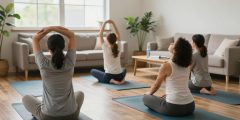
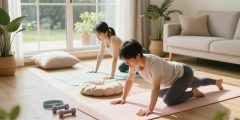
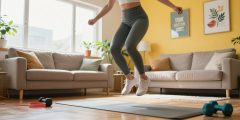
Starting a fitness journey can be tough, especially if you think you need a lot of equipment. But, you can get a great lower body workout right at home with no equipment at all.
Imagine strengthening your legs and boosting your fitness without spending on gym memberships or equipment. At-home lower body exercises are just as good as gym workouts and are super easy to do.

Adding simple bodyweight leg workouts to your day can make you stronger, more energetic, and healthier. The best thing is, these exercises are easy to follow and need no special equipment.
Key Takeaways
- Improve leg strength with simple bodyweight exercises.
- No equipment is needed for an effective lower body workout.
- At-home exercises offer convenience and flexibility.
- Boost endurance and overall well-being.
- Easy to incorporate into your daily routine.
The Benefits of Training Your Lower Body
A strong lower body is key to being fit. Doing lower body workouts boosts functional strength, metabolism, and health.
Functional Strength for Everyday Activities
Working out your lower body makes you stronger for daily tasks. This means you can walk better, climb stairs, and stay balanced. Strengthening your legs and glutes helps you move more easily and lowers fall risks.
Metabolic Advantages of Lower Body Training
Lower body exercises have big metabolic benefits. Squats and lunges work big muscles, which burn more energy. This helps with weight control and boosts metabolic health.
| Exercise | Muscle Group | Metabolic Impact |
|---|---|---|
| Squats | Legs, Glutes | High |
| Lunges | Legs, Glutes | High |
| Calf Raises | Calves | Moderate |
Injury Prevention and Joint Health
Strengthening your lower body helps prevent injuries and keeps joints healthy. Strong muscles around joints offer better support and lower injury risks. This is especially true for knees and ankles, which often get strained.

Adding lower body exercises to your workout routine brings these benefits. It improves your fitness level overall.
Why Bodyweight Training Works
Bodyweight training is popular for its effectiveness and ease. It uses your body weight to build strength and improve flexibility. It’s great for boosting fitness without needing equipment.
Convenience and Accessibility
One big plus of bodyweight training is how easy it is to do anywhere. You don’t need a gym or special gear. This makes it simple to keep up with workouts, even when you’re busy.
Fitness expert Jane Doe once said,
“The best exercise is the one you can do consistently.”
Bodyweight training helps you stay consistent.
Progressive Overload Without Weights
Progressive overload means gradually increasing the challenge to grow stronger. Bodyweight training can do this in many ways. For example, you can do more reps, change how you move, or rest less between sets.
Going from a regular squat to a single-leg squat is a great way to up the ante. Increasing the difficulty of bodyweight exercises is key to continuous improvement.

Full Range of Motion Benefits
Bodyweight exercises often let you move fully, which boosts flexibility and lowers injury risk. They strengthen muscles and improve joint health. For instance, a deep squat works your legs, core, and hips.
This full movement keeps you strong for daily tasks.
Easy Lower Body Workout Without Equipment: The Fundamentals
You don’t need a gym to start a lower body workout. With a few simple steps, you can make a workout routine that’s both tough and rewarding.
Setting Up Your Workout Space
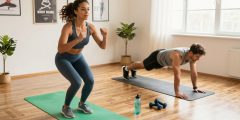
First, set up a good workout space at home. You don’t need a lot of room; a small area is enough. Make sure the floor is not slippery and use a yoga mat for comfort.
Having a dedicated workout area helps you stay focused. It’s also smart to keep the area well-ventilated and at a comfy temperature.
Warming Up Properly
Warming up properly is key before any workout. It boosts blood flow to your muscles, lowering injury risk. Leg swings, high knees, and calf raises are great warm-up moves for lower body workouts.
A dynamic warm-up that matches your workout is best. For example, if you’re doing squats, start with bodyweight squats to get your muscles ready.

Understanding Workout Structure
Knowing your workout’s structure is crucial for its success. A typical lower body workout includes squats, lunges, glute bridges, and calf raises.
Organize your workout into a circuit format. Move from one exercise to the next with little rest in between. This keeps your heart rate up and boosts cardiovascular health.
| Exercise | Sets | Reps |
|---|---|---|
| Squats | 3 | 12 |
| Lunges | 3 | 12 per leg |
| Glute Bridges | 3 | 15 |
Essential No-Equipment Lower Body Exercises
Strengthening your lower body is easy with simple exercises you can do anywhere. Bodyweight exercises are great for this. They work on key muscles, boosting strength, balance, and flexibility.

Bodyweight Squats and Variations
Bodyweight squats are key for lower body strength. Stand with feet shoulder-width apart, then lower down until thighs are parallel to the ground. Push through heels to stand up. Try narrow-stance squats for quads or sumo squats for glutes and inner thighs.
Lunges and Their Modifications
Lunges target quadriceps, hamstrings, and glutes. Step forward with one foot, lowering until back knee almost touches the ground. Push through front heel to stand, then switch legs. Try walking lunges for more intensity or side lunges for glutes and thighs.
Glute Bridges and Hip Thrusts
Glute bridges and hip thrusts focus on glutes. Lie on back with knees bent, feet flat, and lift hips towards ceiling. Hip thrusts are more intense, lifting hips with shoulders on a bench or floor.
Calf Raises and Ankle Strengtheners
Calf raises strengthen calf muscles. Stand on a step or curb, heels hanging off, then raise up onto tiptoes and lower. Ankle circles and toe raises also boost ankle strength and mobility.
Adding these exercises to your routine gives you a full lower body workout without equipment. Focus on form and increase intensity to see results.
Advanced Bodyweight Leg Exercises
To boost your lower body workout, try advanced bodyweight leg exercises. These tough moves build strength, boost endurance, and improve fitness.

Plyometric Movements: Jump Squats and Box Jumps
Plyometric exercises boost power and explosiveness. Jump squats and box jumps are great for your legs. Start in a squat, then jump up, landing softly.
Box jumps mean jumping onto a box, then stepping down. These exercises improve power and coordination. Adding them to your routine can greatly enhance your athletic skills.
Single-Leg Challenges: Bulgarian Split Squats and Pistol Squats
Single-leg exercises are key for balance, stability, and strength. The Bulgarian split squat focuses on the front leg. Pistol squats lower your body on one leg, then push back up.
These exercises help fix strength imbalances between legs. They improve lower body strength and stability.
Posterior Chain Focus: Single-Leg Deadlifts and Good Mornings
Exercises for the posterior chain are vital for a balanced lower body workout. Single-leg deadlifts lift your body on one leg. Good mornings target hamstrings and glutes, bending at the hips.
Strengthening the posterior chain improves posture, reduces injury risk, and boosts athletic performance.
Isometric Strength: Wall Sits and Pulse Squats
Isometric exercises hold a position to build strength and endurance. Wall sits stand with your back against a wall, sliding down. Pulse squats perform a partial squat, then pulse up and down.
Isometric exercises like wall sits and pulse squats are great for building strength without big joint movements.
| Exercise | Primary Muscle Group | Secondary Muscle Group |
|---|---|---|
| Jump Squats | Quadriceps | Glutes, Calves |
| Bulgarian Split Squats | Quadriceps, Hamstrings | Glutes |
| Single-Leg Deadlifts | Hamstrings | Glutes, Lower Back |
| Wall Sits | Quadriceps | Glutes, Hamstrings |
Complete Lower Body Workout Routines
Now that we’ve covered the essential exercises, it’s time to put together a comprehensive lower body workout routine that suits your fitness level. Whether you’re a beginner looking to get started or an advanced athlete seeking a challenge, we’ve got you covered.

Beginner Routine (10-15 minutes)
For those new to lower body training, start with a routine that includes bodyweight squats, glute bridges, and calf raises. Perform each exercise for 3 sets of 10-12 reps. This routine is designed to be completed in 10-15 minutes, making it easy to fit into your daily schedule. As you get stronger, you can increase the duration and intensity.
Sample Beginner Routine: Bodyweight squats (3 sets of 10 reps), glute bridges (3 sets of 12 reps), calf raises (3 sets of 15 reps).
Intermediate Routine (20-25 minutes)
Once you’ve built a foundation of strength, it’s time to step up your workout. The intermediate routine includes lunges, single-leg deadlifts, and wall sits. Perform each exercise for 3 sets of 12-15 reps. This routine should take around 20-25 minutes to complete. Remember to focus on proper form and control throughout each exercise.
Example Intermediate Routine: Lunges (3 sets of 12 reps per leg), single-leg deadlifts (3 sets of 12 reps per leg), wall sits (3 sets of 60-second hold).
Advanced Routine (30+ minutes)
For those looking for a more challenging workout, the advanced routine includes plyometric movements like jump squats and box jumps, as well as single-leg challenges such as Bulgarian split squats. Perform each exercise for 3-4 sets of 12-15 reps. This routine is designed to push your strength and endurance to the next level.
Sample Advanced Routine: Jump squats (3 sets of 12 reps), Bulgarian split squats (3 sets of 12 reps per leg), box jumps (3 sets of 15 reps).
HIIT Lower Body Circuit
For a high-intensity interval training (HIIT) lower body circuit, combine exercises like squat jumps, lunges, and glute bridges into a circuit. Perform each exercise for 30 seconds, followed by 30 seconds of rest. Repeat the circuit 3-4 times. This type of workout is great for improving cardiovascular fitness and burning calories.
“The key to a successful HIIT workout is to push yourself during those 30 seconds of exercise. Give it your all, and you’ll be rewarded with a great lower body workout.”
Example HIIT Circuit: Squat jumps (30 seconds), lunges (30 seconds per leg), glute bridges (30 seconds), rest (30 seconds). Repeat for 3-4 rounds.
Recovery and Nutrition for Lower Body Development
To get the most out of your lower body workouts, knowing about recovery and nutrition is key. While regular exercise is important, how well your body recovers and adapts is what really matters for strength and muscle growth.

Optimal Recovery Practices
Getting enough rest is as crucial as the workout itself. Adequate rest, like 7-9 hours of sleep each night, helps your muscles heal and grow. Also, taking rest days lets your lower body recover from hard workouts.
Stretching and foam rolling are great for recovery too. They help reduce muscle tension and boost flexibility. These activities not only help you recover but also improve your performance in future workouts.
Nutrition to Support Leg Strength and Growth
Good nutrition is vital for your lower body goals. Make sure you eat enough protein to help your muscles repair and grow. Aim for a diet rich in lean proteins, complex carbs, and healthy fats.
Drinking enough water is also key for your body’s performance and recovery. It keeps your muscles working well and supports your overall health.
Addressing Soreness and Preventing Injury
Muscle soreness is common, especially when you start new lower body exercises. While some soreness is okay, excessive soreness or pain might mean you’re overdoing it or doing it wrong. Make sure to use the right form and slowly increase the intensity to avoid injuries.
If soreness lasts, try active recovery techniques like light cardio or yoga. They help with blood flow and healing.
Progressing Your No-Equipment Leg Workout
To keep your muscles guessing, you need to make changes to your workout. As you get better, it’s important to challenge yourself. This helps you avoid getting stuck and keeps your strength and endurance growing.
When and How to Increase Difficulty
To make your workout harder, try changing the exercises you do. You can adjust the angle of your body or the movement range. Progressive overload is crucial, even without weights. This means doing more reps, less rest, or making the exercises tougher.

Adding Time Under Tension and Tempo Changes
Increasing time under tension and changing exercise tempo also helps. Slowing down squats and lunges makes them harder. This boosts strength and endurance.
Incorporating Unilateral Training for Balance
Unilateral training focuses on one limb at a time. It’s great for balance, coordination, and leg strength. Single-leg squats and lunges require more control. They help spot and fix leg imbalances. Adding unilateral exercises can lead to better balance and lower injury risk.
Conclusion: Building Consistency with Your Lower Body Routine
Building a strong lower body without equipment is possible with a good plan. This article has shown you exercises and workout plans to help. You can make big strides in your fitness journey.
Being consistent is crucial for seeing results. Stick to your workout plan and make changes when needed to avoid getting stuck. Every small step you take can lead to big improvements over time.
Make exercise a regular part of your life and stay true to your goals. This will help you build a stronger, healthier lower body. Keep motivated, track your progress, and celebrate your wins. This will help you stay on track with your lower body routine.