“You don’t have to be great to start, but you have to start to be great.” – Zig Ziglar. This quote shows how starting small can lead to big changes. It’s all about taking that first step towards a healthier life, even on the most chaotic days.
Keeping up with a fitness routine can be tough, especially when life gets hectic. But, adding time-efficient exercises to your daily routine can be a game-changer.

Bodyweight exercises are a smart choice for those with little time. They need no equipment, can be done anywhere, and are a great way to stay active.
Key Takeaways
- Effective bodyweight exercises for busy days
- Quick workouts that can be done anywhere
- No equipment required for a great workout
- Time-efficient exercises to fit your busy schedule
- Improved overall fitness with minimal effort
The Modern Fitness Challenge: No Time to Exercise
In today’s fast world, finding time for exercise is a luxury many can’t afford. Work schedules and family duties are making it hard for people to focus on their health.
Statistics on America’s Busy Lifestyle
A recent study shows how busy America is. Many people feel overwhelmed by their daily tasks. They work long hours and have little time for fun.
| Category | Percentage |
|---|---|
| Adults working over 50 hours/week | 25% |
| Individuals reporting no exercise | 30% |
| People feeling overwhelmed daily | 45% |
Health Impacts of Missed Workouts
Missing workouts can harm your health in many ways. It can lead to weight gain, poor heart health, and stress. Regular exercise is key to staying healthy.
For those with tight schedules, time-saving fitness exercises can help. Even short workouts can improve your health. So, busy schedule workouts are vital for a healthy life.

Why Bodyweight Exercises for Busy Days Are the Ideal Solution
Busy days don’t mean you have to skip your fitness goals. Bodyweight training is a smart choice for those with tight schedules. It lets you stay fit without needing special gear or gym memberships.
The Accessibility Factor: Anytime, Anywhere Workouts
Bodyweight training is super convenient. You can do these exercises anytime, anywhere. Whether you’re at home, in a hotel, or at work, it’s easy to fit in a workout.

Scientific Evidence for Bodyweight Training Effectiveness
Research proves bodyweight training works just as well as weightlifting. It boosts strength and heart health. Regular bodyweight workouts can greatly improve your fitness and health.
Experts agree that bodyweight training is a great gym alternative. Adding bodyweight exercises to your daily routine helps you reach your fitness goals. You don’t have to give up valuable time.
The 7-Minute Full Body Wake-Up Routine
A 7-minute full-body wake-up routine is a great way to start your day, even when mornings are busy. This quick workout boosts your blood flow, energizes your muscles, and gets you ready for the day.
Morning Activation Exercises
Morning exercises are key to waking up your muscles and getting your blood moving. Some good ones include:
- Bodyweight squats: Stand with your feet shoulder-width apart, then lower your body down until your thighs are parallel to the ground.
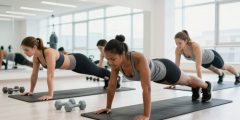
- Push-ups: Start in a plank position, lower your body until your chest nearly touches the ground, then push back up.
- Lunges: Stand with your feet together, take a large step forward with one foot, and lower your body down until your back knee almost touches the ground.
Energizing Movement Patterns
Getting your heart rate up and energizing your body is important. Try these:
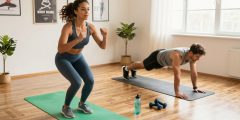
- Jumping jacks: Stand with your feet together, then jump your feet apart while raising your arms above your head.
- Mountain climbers: Start in a plank position, then bring one knee up towards your chest, followed by the other knee, mimicking running.

Keeping proper form is key to a good workout and avoiding injuries. Make sure to move smoothly and keep your core tight during each exercise.
For example, in squats, keep your back straight and lower down slowly. When doing push-ups, keep your body straight from head to heels.
Quick Bodyweight Exercises You Can Do During Work Hours
Moving your body at work can boost your energy and focus. Even a few minutes of exercise can change how you feel and work.
Desk-Side Movements for Energy Boosts
Try chair squats, desk push-ups, and leg raises at your desk. These desk-side movements help break up sitting and can be done quietly.
- Chair Squats: Stand up and sit down without using your hands.
- Desk Push-Ups: Place your hands on the desk and do push-ups.
- Leg Raises: Slowly raise one leg off the floor, hold, and lower.
Stairwell and Hallway Mini-Circuits
If you have stairs or hallways, use them for mini-circuits. Try climbing stairs, walking lunges, or brisk walking.
| Exercise | Reps/Duration |
|---|---|
| Stair Climbing | 3 sets of 30 seconds |
| Walking Lunges | 2 sets of 10 reps per leg |
| Brisk Walking | 5 minutes |
Staying Professional While Staying Active
You can stay active at work without looking unprofessional. Pick exercises that don’t draw attention. For example, take the stairs or do desk-side stretches quietly.

Adding these quick workouts at work can boost your health and work performance. Every movement helps, and staying active at work can make your day better.
Lunch Break Power Sessions: 15-Minute Transformers
Turn your lunch break into a powerful workout with these 15-minute bodyweight exercises. In today’s busy world, it’s hard to find time to exercise. But a good lunch break workout can change the game.
Complete Bodyweight Circuit Design
A good bodyweight circuit targets big muscle groups and includes cardio. To create an effective circuit, consider these elements:
- Upper Body Exercises: Push-ups, dips (using a chair or bench), and arm circles.
- Lower Body Exercises: Squats, lunges, and calf raises.
- Core Exercises: Plank, Russian twists, and leg raises.
- Cardio Exercises: Jumping jacks, burpees, or mountain climbers.

Recovery Techniques for Returning to Work
After a tough workout, it’s key to use recovery techniques to feel refreshed at work. Some good techniques include:
- Deep Breathing Exercises: Spend a few minutes breathing deeply and calming your mind.
- Static Stretching: Stretch major muscle groups like hamstrings, quadriceps, and chest muscles.
Sample 15-Minute Workout Plan
Here’s a 15-minute workout plan for your lunch break:
- Warm-up (2 minutes): Jumping jacks or jogging in place.
- Upper Body Circuit (4 minutes): Push-ups (30 seconds), dips (30 seconds), rest (30 seconds), repeat.
- Lower Body Circuit (4 minutes): Squats (30 seconds), lunges (30 seconds), rest (30 seconds), repeat.
- Core Circuit (4 minutes): Plank (30 seconds), Russian twists (30 seconds), rest (30 seconds), repeat.
- Cool-down (3 minutes): Static stretching for major muscle groups.
By adding this 15-minute workout to your lunch, you’ll boost your energy and fitness. Don’t forget to stay hydrated and listen to your body.
High-Intensity Interval Training for Time-Crunched Schedules
For those with packed schedules, finding time for exercise is tough. High-intensity interval training (HIIT) is a great solution. It’s known for its ability to give great results in little time.

The Science Behind HIIT Efficiency
HIIT efficiency comes from its intense, short bursts followed by quick breaks. This boosts metabolism and heart health. It also improves insulin sensitivity and fat burning, perfect for those short on time.
4 HIIT Protocols Under 10 Minutes
Here are four HIIT protocols that can be done in under 10 minutes:
- 30 seconds of burpees followed by 30 seconds rest
- 45 seconds of jump squats followed by 15 seconds rest
- 20 seconds of mountain climbers followed by 40 seconds rest
- 60 seconds of plank jacks followed by 30 seconds rest
Intensity Scaling for Different Fitness Levels
HIIT is great because it can be adjusted for everyone. Intensity scaling lets people of all fitness levels join in. Beginners start with shorter intervals and longer breaks, then increase as they get fitter. Advanced athletes can do more complex moves or longer intense intervals.
Adding high-intensity interval training to your routine can lead to big fitness gains, even with a busy schedule. It’s a flexible and efficient way to improve your health, whether you’re just starting or already fit.
Evening Stress-Relief Through Bodyweight Training
Bodyweight training is great for easing evening stress and helping you relax. As the day ends, our bodies and minds often feel tense. Doing bodyweight exercises can help ease this tension, making it easier to sleep well.
Tension-Releasing Movement Patterns
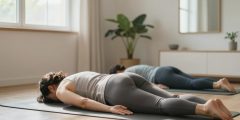
Some bodyweight exercises are better at releasing tension. Dynamic stretches and mobility exercises loosen tight muscles. Gentle yoga-inspired movements also help with flexibility and calmness.
Leg swings, arm circles, and torso twists are simple yet effective. You can do them at home.

Mind-Body Connection Exercises
Exercises that connect the mind and body are great for stress relief. Deep breathing exercises paired with bodyweight movements can relax you. For example, doing bodyweight squats with deep breathing can calm your nervous system.
Pre-Sleep Relaxation Routine
Having a pre-sleep routine helps your body know it’s time to relax. A good routine might include:
- Gentle bodyweight exercises like leg raises or wall push-ups
- Deep breathing exercises
- Meditation or mindfulness practices
As
“The mind is everything; what you think, you become.” – Buddha
shows, mental preparation is key for a good night’s sleep. Adding these practices can greatly improve your sleep.
By adding bodyweight training to your evening routine, you can manage stress better. As you make these exercises a regular part of your routine, you’ll find it easier to handle daily challenges. You’ll also sleep better at night.
Weekend Warrior: Comprehensive No-Equipment Workouts
Unleash your inner weekend warrior with effective bodyweight exercises that require no equipment. The weekend is an ideal time to focus on your fitness, allowing you to recharge for the week ahead.
30-Minute Full-Body Routines
A 30-minute full-body workout is an efficient way to stay fit without spending hours at the gym. Here’s a simple routine:
- Burpees: 3 sets of 10 reps
- Push-ups: 3 sets of 15 reps
- Squats: 3 sets of 20 reps
- Plank: 3 sets, holding for 30 seconds each
This routine targets major muscle groups, improving strength and cardiovascular health.
Progressive Bodyweight Training Plans
To continue making progress, it’s essential to have a structured plan. Progressive bodyweight training involves gradually increasing the difficulty of your workouts.
| Week | Workout Routine | Sets/Reps |
|---|---|---|
| 1-2 | Bodyweight Squats | 3×10 |
| 3-4 | Squats with pause | 3×12 |
| 5-6 | Squats with jump | 3×15 |
This progressive plan helps in building strength and endurance over time.
Recovery Strategies Between Sessions
Recovery is a crucial aspect of any workout plan. Adequate rest and nutrition help your body repair and grow stronger.
- Ensure 48 hours of rest between intense workouts for the same muscle group.
- Stay hydrated and consume a balanced diet rich in proteins and complex carbohydrates.
- Incorporate stretching exercises to improve flexibility and reduce muscle soreness.
By balancing workout and recovery, you can maximize your fitness gains.

Expert Techniques to Maximize Your Bodyweight Exercise Results
To get the most out of bodyweight exercises, focus on form, progressive overload, and breathing. These expert tips can make your workouts safer and more effective.
Form Fundamentals for Injury Prevention
Good form is key to effective bodyweight training. It makes sure exercises are done right and lowers injury risk. Maintaining correct posture and alignment in exercises like push-ups and squats is vital. For example, keeping straight from head to heels in a push-up avoids back strain.
Progression Methods Without Adding Equipment
You don’t need equipment to get better at bodyweight exercises. Try increasing the number of repetitions, making exercises harder (like diamond push-ups), or cutting down rest time. Another good way is to slow down the tempo of your exercises, which works your muscles harder.
Breathing Patterns for Optimal Performance
Right breathing can really boost your performance in bodyweight exercises. Exhale during the exertion phase (like when pushing up in a push-up) and inhale during the relaxation phase. This helps keep your rhythm and control, improving how well your muscles work together.
| Exercise | Proper Breathing | Benefit |
|---|---|---|
| Push-up | Exhale on push-up, inhale on return | Enhanced control and rhythm |
| Squat | Exhale on standing, inhale on squatting | Improved muscular coordination |
“The way you breathe is closely linked to your performance in bodyweight exercises. Proper breathing techniques can make a significant difference in your workout efficiency.”
Success Stories: Busy Professionals Who Transformed with Bodyweight Training
Bodyweight training has changed the game for busy professionals wanting to get fit. It helps them improve their health and feel better mentally. Many have seen big changes, thanks to bodyweight exercises.
Case Studies and Transformations
Many case studies show how bodyweight training works for busy folks. For example, a marketing executive lost 20 pounds and felt more energetic with a 10-minute routine each day. A software developer cut his body fat by 5% in 6 weeks with HIIT during lunch.
Common Strategies Among Success Stories
Despite their busy lives, successful bodyweight trainers share common tips. These include:
- Consistency: Regular exercise, even if it’s just a few minutes each day.
- Flexibility: Adapting workouts to fit changing schedules.
- Progressive Overload: Gradually increasing the intensity of workouts.
Looking into these success stories, a pattern emerges. The table below shows the common strategies and their benefits:
| Strategy | Benefit |
|---|---|
| Consistency | Improved cardiovascular health and increased stamina |
| Flexibility | Ability to adapt workouts to changing schedules |
| Progressive Overload | Increased muscle strength and endurance |
By using these strategies, busy professionals can see amazing fitness changes. They can do it even with a tight schedule.
Digital Tools for Guided Bodyweight Workouts
Digital tools have changed how we do bodyweight exercises. They offer flexibility and guidance. In today’s fast world, having workouts at your fingertips can really motivate you.
Top-Rated Mobile Applications
Many mobile apps are top-notch for their quality and ease of use. Nike Training Club and Yoga Studio are favorites for their wide range of exercises and customizable plans.
- Nike Training Club: Offers workouts for all fitness levels.
- Yoga Studio: Has detailed yoga routines for flexibility and calm.
Online Resources for Quick Workout Guidance
Online, YouTube and fitness blogs are great resources. Fitness Blender on YouTube offers free home workouts.
“The key to a successful fitness journey is consistency, and digital tools make it easier to stay on track.” – Fitness Expert
Setting Up Digital Reminders and Workout Schedules
To get the most from digital tools, setting reminders and schedules is key. Most apps let you set reminders and track your progress.
| Tool | Feature | Benefit |
|---|---|---|
| Nike Training Club | Customizable Plans | Personalized Workouts |
| Yoga Studio | Detailed Routines | Improved Flexibility |
| Google Fit | Activity Tracking | Monitoring Progress |
Using these digital tools and sticking to a routine helps keep up with bodyweight exercises. Even with a busy schedule, it’s possible.
Conclusion: Building a Sustainable Fitness Habit Despite a Busy Life
Creating a sustainable fitness habit is key for health, especially for those with busy lives. We’ve looked at effective bodyweight exercises and how to fit them into tight schedules.
Quick bodyweight routines, like a 7-minute wake-up routine or lunch break workouts, help keep activity levels up. This consistency is vital for a fitness routine that lasts.
Bodyweight training also boosts mental health, offering stress relief. Digital tools, like top mobile apps, help keep fitness goals on track for a busy life fitness routine.
The path to a lasting fitness habit starts with small, doable steps. Begin with simple routines and gradually add more intensity and time. This way, a fitness habit that fits a busy lifestyle can be built.