Efficient Core Workouts: Quick Exercises Anyone Can Do
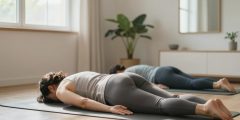
A nurse at Mount Sinai finished her shift on a rainy Tuesday morning. She had just ten minutes before her commute. She rolled out a yoga mat in the nurses’ lounge and did a quick circuit of planks and dead bugs.
Feeling stronger, she walked out the door. This short session was as important as her weekend workouts.

This article offers practical tips on quick core workouts for busy lives. You’ll learn what we mean by core, quick routines, and beginner steps. Plus, you’ll find safe, easy-to-use exercises for all levels.
These workouts are designed to build a strong midsection in short sessions. Whether you’re looking for a home routine, a five-minute session before work, or something for beginners to intermediates, we’ve got you covered. You’ll discover the benefits, how it works, beginner moves, at-home routines, low-impact options, fast circuits, and how to progress safely.
Key Takeaways
- Quick Core Exercises Anyone Can Do provide time-efficient strength gains.
- Efficient core workouts can be done with minimal equipment at home.
- Quick ab workouts improve posture, stability, and daily function.
- Beginner-friendly progressions make an effective core workout routine accessible.
- Tracking hold times and reps helps measure steady improvement.
Quick Core Exercises Anyone Can Do
Short, focused core sessions can make a big difference when done regularly. Exercise science shows that brief workouts improve muscle endurance and posture. They also help with motor control. Busy people can build lasting core strength with these quick routines.

Why quick core routines matter for busy lifestyles
Micro-workouts of 5–15 minutes fit into tight schedules and boost commitment. Regular short workouts improve coordination and reduce stiffness from sitting. Experts say steady practice is better than long, sporadic sessions for preventing back pain.
Who benefits from short, efficient core workouts
Busy professionals and parents can gain strength without spending a lot of time. Older adults can improve balance and posture safely. Athletes use these workouts for extra stability. Physical therapy clients can follow simple routines for back pain prevention.
How to fit quick core exercises into a daily schedule
Use habit-stacking to make it a routine. Try a 5-minute core routine after brushing teeth or between meetings. You can also do three 10-minute sessions a week or daily quick ab routines to keep up with progress while saving time.
| Goal | Session Length | Frequency | Example Moves |
|---|---|---|---|
| Maintain posture | 5 minutes | Daily | Dead bug, side plank hold, glute bridge |
| Build endurance | 10 minutes | 3–5 times weekly | Plank variations, bird-dog, hollow hold |
| Supplement athletic training | 5–15 minutes | After warm-up or run | Single-leg bridge, Pallof press, Russian twist |
| Rehab and stability | 5–10 minutes | Daily or per therapist plan | Pelvic tilt, modified plank, marching dead bug |
Benefits of Efficient Core Workouts
Efficient core training boosts daily function and athletic ability without long gym sessions. Targeted moves focus on core strengthening. They improve posture, reduce spinal load, and support safer movement. Short, well-designed sets deliver measurable gains with progressive overload and proper form.

Improved posture and reduced back pain
Strengthening the transverse abdominis and erector spinae improves spinal alignment. This lessens compressive forces on vertebrae. Clinical guidelines recommend core stabilization for back-pain management.
These muscles act like an internal corset. Regular core strengthening exercises can reduce back pain. They help maintain neutral spine during lifting and sitting.
Enhanced athletic performance and balance
A stronger midsection improves force transfer between the legs and arms. This sharpens sprinting, throwing, and cycling mechanics. Better core control enhances balance and agility, lowering injury risk in sports and everyday activities.
Older adults gain fall-prevention benefits from consistent abdominal workouts. This translates to a steadier gait and improved reaction to trips.
Time-saving fitness gains for all levels
Short protocols like EMOMs, focused circuits, and isometric holds are effective core workouts. They follow progressive plans. Five to ten minutes of daily work can raise endurance and strength for beginners and maintainers alike.
Properly programmed core strengthening exercises let busy people see results without lengthy sessions.
| Benefit | Key Muscles | Practical Result |
|---|---|---|
| Posture and back health | Transverse abdominis, erector spinae | Reduced low-back strain; easier daily lifting |
| Performance and balance | Obliques, rectus abdominis, transverse abdominis | Smoother force transfer; improved agility and fall prevention |
| Time-efficient gains | All core stabilizers | Measurable strength and endurance with 5–15 min routines |
| Accessibility | Core stabilizers and hip musculature | Abdominal workouts for all levels; minimal equipment needed |
Fundamental Core Anatomy and Function
The core is a layered system that supports movement, posture, and breathing. Knowing the key muscles helps you choose the right exercises. This avoids wasted effort. Each part has a role, and variety is key for strong, resilient function.

Main muscles targeted: rectus abdominis, obliques, transverse abdominis, erector spinae
The rectus abdominis is what people call the “six-pack.” It helps in trunk flexion. The internal and external obliques handle rotation and side bending, adding to spinal stability.
The transverse abdominis is a deep stabilizer. It controls intra-abdominal pressure, acting like a natural weight belt. The erector spinae runs along the spine, providing extension and support.
Pelvic floor muscles and the diaphragm complete the core cylinder. Their coordination is crucial for breathing, continence, and transferring force during movements.
How core strength impacts everyday movements
Core muscles stabilize the spine during everyday tasks like lifting groceries or carrying a child. They help transfer force between the upper and lower body. This improves balance and power during walking and sports.
Tasks that demand anti-extension or anti-rotation control, like carrying a heavy bag or catching yourself from a fall, rely on trained stabilizers. Including exercises that train anti-rotation and anti-extension improves function and injury resilience.
Common misconceptions about abdominal training
Spot reduction is a myth. Abdominal exercises alone won’t remove belly fat. Changes in strength and body composition come from overall training and nutrition, not endless sit-ups.
High rep crunches are not the only way to a strong midsection. Isometric holds, anti-rotation drills, and progressive overload offer better results. A well-rounded plan mixes abdominal exercises with stability and dynamic work for true capability, not just appearance.
Beginner Core Exercises with Minimal Equipment
Start with simple moves that teach you to breathe, control your pelvis, and align your spine. These exercises need just a mat and maybe a small weight. Keep your workouts short and focused to avoid getting tired.

Follow a clear plan so each exercise improves your quality, not just how many you do. Use these tips to avoid mistakes like sagging hips, holding your breath, or arching your back too much.
Basic plank progressions for beginners
Start with a plank on your forearms, keeping your shoulders over your elbows. Hold your spine and pelvis straight, breathing evenly. If your back rounds or sags, try a knee plank first. A wall plank is great for those new to core exercises.
As you get better, try a plank with your arms straight, lift one arm or leg at a time, or add weights. Remember to keep your hips up and your pelvis neutral, breathing smoothly.
Simple glute bridge and pelvic tilt variations
Begin lying on your back with your feet hip-width apart. Do a pelvic tilt to feel your back muscles working. Then, lift your hips up until your pelvis is level and your ribs are down.
Next, try lifting one leg while keeping the other on the ground. Keep your toes relaxed and press your heels into the ground. This helps protect your back.
Dead bug and bird-dog for core stability
For the dead bug, lie on your back with your knees up. Lower one arm and the opposite leg slowly, keeping your core tight. Start with small movements and add weights as you get stronger.
The bird-dog starts in a quadruped position. Reach out with one arm and the opposite leg, keeping your hips straight. Start with short holds and gradually increase the time and distance.
| Exercise | Purpose | Regression | Progression |
|---|---|---|---|
| Forearm plank | Builds static core endurance | Knee plank, wall plank | Straight-arm plank, weighted plank |
| Pelvic tilt | Teaches posterior pelvic control | Small range tilts | Combine with bridge holds |
| Glute bridge | Hip extension and posterior chain | Low lift range | Single-leg bridge, slow eccentric |
| Dead bug | Lumbar stabilization with limb movement | Reduce limb travel | Add ankle weights or banded resistance |
| Bird-dog | Dynamic spinal stability and balance | Hold opposite limb near the floor | Longer reaches, tempo changes |
These exercises are perfect for beginners and can fit into short workouts. Focus on controlled movements, steady breathing, and gradually increasing the load. This will help you build a strong foundation for more challenging exercises.
At-Home Simple Core Workouts
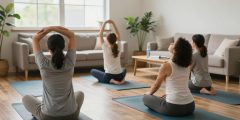
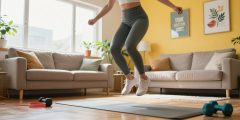
Short, focused sessions can build strength and consistency without a gym. You can do these routines on a kitchen mat or living room rug. Start with a brief warm-up like dynamic cat-cow or marching in place to wake the spine and hips before moving into the sets.

5-minute morning routine
Try a single 5-minute core workout when time is tight. Use this sample quick set: 30 seconds plank, 30 seconds glute bridge, 30 seconds dead bug, 30 seconds side plank each side, 30 seconds bird-dog or slow mountain climbers. Keep breaths steady and move with control.
Warm up first for 1–2 minutes with gentle movement. This small habit makes simple core workouts at home easier to stick to and reduces stiffness for the day ahead.
10-minute no-equipment circuit
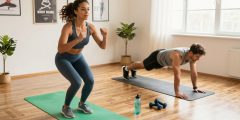
When you have a little more time, aim for a 10-minute no equipment core routine. Complete three rounds of 40 seconds on, 20 seconds rest: bicycle crunches, reverse crunches, plank shoulder taps, flutter kicks. Pace intensity to match fitness level.
Beginners should shorten work intervals or use modified versions, such as performing shoulder taps from the knees or lowering range on flutter kicks. These no equipment core workouts let you scale safely while building endurance.
Household items for resistance
Use everyday objects to add variety without buying gear. A sturdy chair works for incline planks and step-through holds. Filled water bottles or canned goods act as light weights for Russian twists or standing anti-rotation presses. Towels can be used for slide-outs on hardwood floors.
Secure each object before use and test the surface for slipping. Thoughtful substitutions expand options for at-home core exercises while keeping safety first.
Low-Impact Core Exercises for All Levels
Low-impact core exercises are great for building strength without hurting your joints. They include easy-to-do moves that you can do every day. These exercises help keep your body stable and improve your posture, even when floor exercises are hard.

There are seated and standing exercises, plus easy ways to make them easier if you have aches. Each exercise is simple to start with, so you can try one today.
Seated and standing options
Seated marches: Sit up straight, tighten your belly, lift one knee, and lower it slowly. Do this for 30 to 60 seconds. It’s a great exercise for people who can’t move much.
Seated Russian twists with hands together: Sit with your feet on the floor, twist your torso slowly to each side. Breathe deeply and use a small range of motion.
Standing anti-rotation press: Hold a band or towel at chest height and press outward. This exercise strengthens your core without needing to bend down.
Standing woodchoppers with no weight: Use your body to mimic a chopping motion. Move slowly and focus on keeping your spine straight and breathing well. These exercises are easy to start with and help with everyday tasks.
Modified exercises for injury prevention
Stay away from full sit-ups if you have back or neck pain. Focus on keeping your spine neutral, supporting your scapula, and breathing deeply. Try gentle planks from your knees to reduce strain.
Do exercises that help your upper back move better to ease pressure on your lower back. If you’re recovering from an injury, talk to a physical therapist to make sure you’re doing the right exercises.
Gentle progressions to increase intensity safely
Make the exercises harder by moving more, holding positions longer, or using light resistance bands. Start with seated exercises, then move to lying down ones, and finally to standing ones when you’re ready.
Keep track of how far you can move without pain, take rest days, and only increase the difficulty when you’re doing the exercises correctly. This way, you can gradually get better at core exercises.
| Move | Intensity | Who it fits | Progression |
|---|---|---|---|
| Seated marches | Low | Beginners, limited mobility | Longer holds, alternating tempo |
| Seated Russian twist (hands together) | Low–Moderate | Anyone needing floor-free core work | Increase rotation, lift feet slightly |
| Standing anti-rotation press (band/towel) | Moderate | Those wanting stability without bending | Use firmer band, add reps |
| Standing woodchopper (no weight) | Moderate | Active users easing back into motion | Add light resistance or increase speed |
| Knee plank isometric | Low–Moderate | People with neck or lumbar sensitivity | Progress to full plank, extend hold time |
Fast Core Routines for Time-Crunched Users
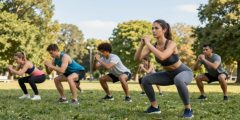
Short, focused sessions can deliver meaningful gains when you choose movements that target multiple muscles at once. These fast core routines pair stability, rotation, and anti-extension work to boost strength in less time. Use the examples below to build quick core strengthening into a busy day.

High-efficiency 5–15 minute circuits
Sample 5–10 minute circuit (repeat 3 rounds for ~10 minutes): 30s forearm plank, 30s bicycle crunches, 30s reverse lunge with rotation (each side counts inside the time), 30s hollow hold. Rest 30–45 seconds between rounds.
This layout creates flow and keeps intensity high while building endurance. These effective core routines work compound patterns so you get strength and movement carryover to daily tasks.
Interval-style core training examples
Tabata format (4 minutes): 20s work / 10s rest × 8 rounds. Try plank jacks for four rounds, then Russian twists for four rounds. Scale to knee plank jacks or seated Russian twists to lower impact.
EMOM format (10 minutes): Minute 1: 45s plank hold, 15s rest. Minute 2: 10 alternating windshield wipers. Repeat. For beginners, change to 40s work/20s rest or fewer reps per minute. Both formats make fast core workouts feel structured and measurable.
Warm-up and cool-down for short sessions
Warm-up (2–3 minutes): dynamic hip swings, cat-cow, and marching in place. These moves raise heart rate and prime the diaphragm for controlled breathing.
Cool-down (3–4 minutes): simple mobility and breathing work. Focus on diaphragmatic breathing, hip flexor stretches, and gentle lumbar mobility to ease stiffness after intense effort.
| Format | Duration | Example Moves | Intensity Scale |
|---|---|---|---|
| High-efficiency circuit | 5–15 min | Plank, bicycle crunches, reverse lunge with rotation, hollow hold | Moderate to high; rest 30–45s between rounds |
| Tabata | 4 min per block | Plank jacks, Russian twists | High; 20s work / 10s rest, scale by reducing work time |
| EMOM | 10 min | 45s plank / 15s rest alternated with windshield wipers | Variable; adjust reps and hold time for beginners |
| Warm-up / Cool-down | 2–4 min each | Hip swings, cat-cow, marching; diaphragmatic breathing, hip flexor stretch | Low; mobility and recovery focused |
Core Exercises for Beginners with Progressions
Start by checking your current ability with simple tests. Time how long you can hold a plank, check your bird-dog control, and see if you keep your spine straight during a glute bridge. These tests help you find the right exercises for beginners.
Use clear markers to track your progress. For example, if you can hold a plank for 20–30 seconds, you’re a true beginner. Wait until you can do it right for two to three times before moving on. This way, you avoid injuries and keep your lower back safe.
Starting point assessments and movement quality checks
First, check your breathing and alignment. Can you breathe smoothly while holding a plank for 20–30 seconds? Does your pelvis stay level during a glute bridge? Can you lift your opposite arm and leg in a bird-dog without losing balance? If yes, you’re ready to move up the ladder.
Progression ladder: from basic to intermediate moves
Follow a series of steps that increase control and load. Here are some examples:
- Knee plank → full plank → plank with limb lifts.
- Dead bug with small range → full-range dead bug → loaded dead bug.
- Glute bridge → single-leg bridge → single-leg bridge with hold.
Move up only when you can do the previous step correctly for two to three workouts. These steps help you gradually get better without sudden jumps.
When to add reps, sets, or resistance
When a movement feels too easy, it’s time to add more. If you can do the required holds or reps correctly for two to three workouts, increase the time or add more sets. Use resistance bands or light dumbbells when bodyweight is no longer challenging.
Change gradually. Aim for 5–10% increases in time, reps, or weight. This slow approach helps you make steady gains and keeps you safe from injuries.
Keep track of your progress every week and adjust your ladder as needed. A simple log with your plank times, bridge quality, and dead bug control will help you stay focused and effective.
Core Exercises with Minimal Equipment
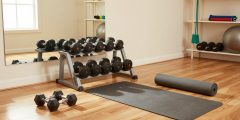
Expand your workout without a gym using simple tools. This section covers how to set up, safe swaps, and a quick routine. It combines stability ball, band, and dumbbell exercises for real results.
Stability ball roll-outs — Kneel with the ball under your forearms. Slowly move the ball away, keeping your spine straight and core tight. Stop when you feel a good stretch, then go back. Try more range or start from your toes for extra challenge. These exercises help control your back and shoulders.
Ball pikes — Start in a plank with your shins on the ball. Lift your hips up, rolling the ball towards your hands. Lower down slowly. Remember to pull your belly button to your spine and avoid shrugging. Increase your speed or add a pause at the top for more challenge.
Band-resisted Pallof press — Anchor a band at chest height. Stand facing it, hold the band with both hands, and push straight out. Resist the band’s pull. Hold for time or do controlled reps. This exercise is great for your core and helps with stability.
Dumbbell Russian twists — Sit with knees bent, hold a dumbbell close, lean back a bit, and twist your torso. Use your ribs, not your arms, for the movement. Increase the weight or extend your arms for more challenge. This targets your obliques.
Weighted dead bugs — Lie on your back with a light dumbbell or water bottle over one shoulder. Lift your opposite leg while keeping your back low. Switch sides with controlled breathing. Start with less range or use light weights for beginners. This strengthens your coordination and core.
For tight budgets, use water jugs or a backpack as dumbbells. Towels can be sliders on hardwood floors. A sturdy chair can help with decline or support. Choose bands from brands like TheraBand or SPRI for reliable tension. Always check handles, seams, and anchor points before each workout to avoid injury.
Sample 12-minute routine (3 rounds): pallof press — 45s, stability ball bridge — 45s, band-resisted woodchopper — 45s per side, dumbbell side bends — 12–15 reps per side, 30s rest/transition. This circuit mixes exercises with minimal equipment for high intensity and easy setup.
Scaling notes: beginners can halve hold times or use lighter bands. Do ball bridge with feet on floor instead of the ball. Replace dumbbell moves with bodyweight ones. Advanced users can lengthen intervals, increase band tension, or add weight to Russian twists and dead bugs.
| Tool | Key Exercises | Setup & Cues | Progression |
|---|---|---|---|
| Stability ball | Roll-outs, pikes, bridges | Forearms or shins on ball, neutral spine, brace core | Increase range, perform from toes, add pauses |
| Resistance band | Pallof press, band woodchopper | Anchor securely, press or pull while resisting rotation | Use heavier band, increase hold time, single-arm variants |
| Dumbbell / substitutes | Russian twists, weighted dead bugs, side bends | Control rotation, maintain low-back contact, steady breathing | Raise weight, extend lever, slow eccentric phase |
| Household options | Backpack carries, water-jug lifts, towel sliders | Secure straps, balance load, check grip points | Increase fill, alter leverage, combine moves into circuits |
Safety, Form, and Common Mistakes
Good technique is key to effective workouts and avoiding setbacks. This guide covers safety, form, and common mistakes. It offers practical tips for every repetition. Follow clear cues, watch for warning signs, and include recovery in your routine to train smart.
Key form cues are more important than just how hard you’re trying. Keep your spine straight and avoid arching or rounding your lower back during planks and crunches. Use your transverse abdominis by lightly bracing without holding your breath.
For floor crunches, keep your chin to your chest to prevent neck strain. When doing rotational moves, bend at the hips instead of forcing your spine to twist. Breathe correctly: exhale when you’re working hard and inhale when you’re relaxing. This helps you stay in control and maintain a steady pace.
Look out for signs to modify exercises that tell you it’s time to change. Sharp pain in your lower back is a warning sign. If you feel numbness, tingling down your leg, or get dizzy, stop right away. Soreness is okay, but if it lasts too long, it’s time to ease up.
Plan to avoid overtraining by including rest and variety. Mix high-effort core workouts with mobility or low-intensity days. Use foam rolling, light walking, and stretches for your hips and lower back. Make sure to get enough sleep and eat well to help your body recover between workouts.
- Neutral spine, consistent breathing, and gentle bracing are non-negotiable key form cues.
- Stop if you feel sharp pain, radicular symptoms, or dizziness—these are clear signs to modify exercises.
- To avoid overtraining, include rest days, vary intensity, and use mobility work and soft-tissue tools.
Use this checklist during your workouts. Check your form cues at the start of each session and pay attention to how your body feels. Recovery is part of the training process. Making small adjustments now can prevent bigger problems later and keep your progress steady and safe.
Tracking Progress and Setting Realistic Goals
Begin by recording a baseline for key measures you can repeat. Note plank durations, clean repetitions for dead bugs and bridges, and perceived exertion. Also, track time-under-tension for weighted moves. Use a simple video check to review movement quality. Reassess every 2–4 weeks to keep tracking progress core with reliable data.
Hold time metrics are easy to implement. Track maximum plank hold, average hold across sets, and timed holds for side planks. Combine those numbers with rep quality counts for exercises like bird-dogs and glute bridges. A short log reduces guesswork and highlights real gains.
Use weekly core plans to structure steady improvement. A four-week sample works well:
- Week 1: Three short sessions (5–10 minutes) focused on form and baseline holds.
- Week 2: Increase session time to 10–12 minutes and add volume for core stability moves.
- Week 3: Introduce light resistance or progressions to raise time-under-tension.
- Week 4: Add interval-style circuits and plan a lighter deload week if fatigue builds.
Keep each week simple. Note session dates, exercise names, hold time metrics, and perceived effort. Small, consistent changes beat sporadic, intense bursts.
To incorporate core into fitness goals, link core work to your broader routine. Place short core sessions after strength workouts or use a morning mobility set to improve posture for desk workers. Pair core-focused days with cardio or mobility on alternate days to balance recovery and overload.
Set realistic targets tied to measurable metrics. Aim to increase plank hold by 10–20 seconds every reassessment or add two clean reps per exercise. Use these milestones to adjust weekly core plans and to better incorporate core into fitness goals without disrupting other training priorities.
Conclusion
This guide shows how efficient core workouts can fit into busy American lives. Short, consistent routines build stability and reduce back pain. Beginner options, low-impact choices, and minimal-equipment moves make quick core exercises anyone can do, whether at home, in a hotel, or between meetings.
Effective core training emphasizes safety and progression. Focus on form, use simple core strengthening progressions, and track endurance, hold time, and rep quality. Start with a 5-minute routine, increase intensity gradually, and note changes so you can adjust sets or resistance when ready.
For personalized plans or injury concerns, consult ACSM-certified trainers or licensed physical therapists. With practical routines and modest equipment, simple core strengthening is realistic for all levels and supports long-term fitness goals.