Finding time for exercise can be tough in today’s world. But, a quick workout can change everything. And you don’t have to leave your house to start.
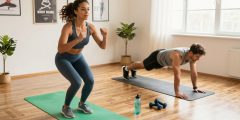
A 15-minute full body workout is a great way to stay fit without spending hours at the gym. With bodyweight exercises, you can get a fantastic workout right at home.

This easy and quick way to stay fit is perfect for busy lives. It offers a fast workout that fits into your schedule.
Key Takeaways
- Quick workouts can be done at home with minimal equipment.
- Bodyweight exercises are effective for a full body workout.
- A 15-minute workout can be a great way to stay fit.
- Home workouts offer flexibility and convenience.
- Fast workouts can be adapted to busy schedules.
The Growing Trend of Short Home Workouts
In recent years, short home workouts have become very popular. This change shows a shift in how people work out. Now, more people want quick and flexible exercise routines that fit into their busy lives.
Why Time-Efficient Workouts Are Gaining Popularity
Time-efficient workouts are now the go-to because they’re easy and effective. The pandemic and the digital fitness boom are key reasons for this trend.
Post-Pandemic Fitness Habits
The pandemic changed how we think about fitness. With gyms closed, people started working out at home. Even with gyms open again, many prefer the ease and flexibility of home workouts.
Digital Fitness Revolution
Digital fitness platforms and apps have made it simple to work out at home. They offer quick, effective routines for all fitness levels. This has helped make short home workouts even more popular.
Recent Research on Short Workout Effectiveness
Studies have looked into how well short workouts work. They’ve given us important insights.
Studies Supporting Brief Exercise Sessions
Research shows short workouts can be very beneficial. For example, a study found that short exercise bursts can boost heart health.
Expert Endorsements
Fitness experts and trainers also support short workouts. They offer quick, intense plans that can be done at home. This adds to the trend’s credibility.
| Study | Findings | Implications |
|---|---|---|
| Journal of the American Heart Association | Short bursts of exercise improve cardiovascular health. | Even brief exercise sessions can be beneficial. |
| American College of Sports Medicine | High-intensity interval training (HIIT) is effective for weight loss and improving fitness. | HIIT can be a valuable component of short home workouts. |
Key Takeaway: Research and expert opinions back the trend of short home workouts. It’s a good and effective way to stay fit.

Benefits of a 15-Minute Full Body Workout at Home
Finding time for exercise can be tough in today’s world. But, a 15-minute full body workout at home is a great solution. It’s quick, effective, and perfect for those with busy lives.
Time Efficiency for Busy Schedules
Exercise can be hard to fit into a busy day. But, a 15-minute workout is remarkably time-efficient. It lets you stay active without taking up too much time.
Fitting Exercise Into Daily Routines
Adding a 15-minute workout to your day can boost your energy and make you more productive. Fitness expert Jillian Michaels says, “Even a short workout can have a big impact on your health and wellbeing.”
Full Body Engagement and Calorie Burn
A full body workout works many muscles at once. This means you burn more calories than with isolated exercises. It’s good for your heart and muscles.
Metabolic Impact of Full Body Training
Full body training boosts your metabolism for hours after working out. This means you keep burning calories even after the workout is over.
Accessibility for All Fitness Levels
A 15-minute full body workout at home is accessible to everyone. It can be adjusted to fit different fitness levels, making it great for all.
Beginner-Friendly Modifications
Beginners can make exercises easier, like using regular squats instead of jump squats. This way, everyone can join in and get benefits.
Advanced Intensity Options
For those who are more advanced, you can add weights or do plyometric movements. This keeps challenging you and helps you get better.

“Exercise is a celebration of what your body can do, not a punishment for what you ate.”
– This mindset is especially true for short, effective workouts like the 15-minute full body routine.
Equipment Needed (or Not Needed)
Doing a quick 15-minute full body workout at home is great because you don’t need much. This makes it easy for anyone, no matter their budget or space.
No-Equipment Options
A no-equipment workout uses bodyweight exercises. These are effective and can be done anywhere, anytime. You don’t need to buy any special gear.
Optional Equipment for Enhanced Results
Adding some basic equipment can make your workout better. You can use household items as fitness tools or get budget-friendly equipment.
Household Items as Fitness Tools
Items like water bottles, chairs, and towels can be used for your workout. They make it easy to get fit at home.
Budget-Friendly Equipment Recommendations
For a little investment, consider resistance bands or a jump rope. They’re cheap, versatile, and boost your workout.

Preparing for Your Workout
Getting ready for a workout is more than just showing up. It’s about preparing well. To get the most out of your 15-minute full body workout at home, focus on a few key things.
Creating a Suitable Space
First, make sure you have a dedicated workout space that’s safe and free from distractions. You don’t need a lot of space. Even a small, well-ventilated corner of a room works.
Space Requirements and Safety Considerations
Your workout area should be clear of obstacles and big enough to move around. Think about the flooring too. It should be safe to prevent slipping and falling.
Proper Warm-Up Techniques
Before you start, do a proper warm-up. It gets your muscles and heart ready for the workout. This helps avoid injuries.
Essential 2-Minute Warm-Up Routine
A 2-minute warm-up is simple. Start with light cardio like jogging in place or jumping jacks. Then, do dynamic stretches like arm circles and leg swings.

Setting Realistic Expectations
It’s key to set realistic expectations about your home workout. Remember, fitness is a journey. It takes time to see progress.
Progress Tracking Methods
To stay motivated, track your progress. Use workout logs, progress photos, or fitness apps. Celebrating small wins helps keep you going.
“Consistency is key when it comes to seeing results from your workout routine.”
Good preparation helps you stick to your workout plan. This way, you’re more likely to reach your fitness goals.
The Complete 15-Minute Full Body Workout at Home
Transform your fitness routine with a quick 15-minute full body workout at home. This routine engages your whole body, boosting your heart health, strength, and flexibility.
Lower Body Exercises (5 minutes)
This part of the workout strengthens your legs and glutes. Start with exercises that warm up your muscles and get your blood flowing.
Squats and Variations (1.5 minutes)
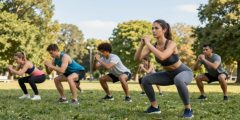
- Begin with standard squats, focusing on proper form: feet shoulder-width apart, back straight, and lowering yourself down as if sitting in a chair.
- Move to sumo squats, widening your stance and turning your feet outward to target different muscle groups.
- Finish with pulse squats, holding the lowered position and pulsing up and down for added intensity.
Lunges and Variations (1.5 minutes)
Lunges target your quadriceps, hamstrings, and glutes. Do walking lunges, alternating legs with each step, and include reverse lunges for variety.
Glute Bridges and Leg Raises (2 minutes)
- Lie on your back with knees bent and feet flat on the floor. Lift your hips towards the ceiling, squeezing your glutes at the top.
- Follow with leg raises, lifting one leg towards the ceiling and then lowering it back down without touching the floor, before repeating with the other leg.

Upper Body Movements (5 minutes)
This segment strengthens your arms, shoulders, and back. You can do these exercises with or without equipment.
Push-Up Variations (2 minutes)
- Start with traditional push-ups, focusing on maintaining a straight line from head to heels.
- Move to diamond push-ups, bringing your hands closer together under your chest to target your triceps.
- Incline push-ups can also be included by placing your hands on a surface higher than your feet.
Arm and Shoulder Exercises (1.5 minutes)
Do arm circles, holding your arms straight out to the sides and making small circles with your hands. Tricep dips, using a chair or bench, are also effective.
Back Strengthening Moves (1.5 minutes)
- Perform rows using dumbbells or resistance bands, focusing on squeezing your shoulder blades together.
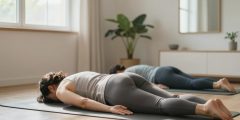
- Include Superman exercises, lying on your stomach with arms extended in front of you and lifting your arms and legs off the ground.
Core and Full Body Finishers (5 minutes)
The final segment targets your core and provides a full-body finish. It ensures you’re engaging multiple muscle groups at once.
Plank Variations (2 minutes)
- Start in a traditional plank position, holding steady and engaging your core.
- Move to side planks, targeting the obliques by lifting your hips off the ground and balancing on one arm.
Dynamic Core Exercises (2 minutes)
Include Russian twists, sitting on the floor with knees bent and leaning back slightly, twisting your torso from side to side. Bicycle crunches can also be effective, lying on your back and alternating bringing your elbow to the opposite knee.
Final Burnout Minute (1 minute)
Finish with high-intensity movements like burpees or jump squats. They get your heart rate up and burn out any remaining energy.
Proper Form and Technique
Knowing how to do exercises right is key to a good workout at home. When you do a 15-minute full body workout, keeping the right form is important. It makes your workout better and keeps you safe from injuries.
Common Mistakes to Avoid
One big mistake is rushing through exercises and ignoring form. It’s vital to control your movements in every exercise. For example, when squatting, make sure your knees don’t go past your toes and keep your back straight.
Injury Prevention Focus
Good form helps avoid injuries. Focus on how your body moves and stays aligned to lower injury risks. Always warm up before you start to get your muscles ready.
Modifications for Different Fitness Levels
Changing exercises to fit your fitness level is crucial for a good workout. Whether you’re just starting or have been working out for a while, adjusting the exercises can help you reach your goals.
Beginner Adaptations
- Do fewer reps or sets.
- Use your body weight instead of weights.
- Make complex moves simpler.
Advanced Progressions
- Do more reps or sets.
- Add weights or resistance bands.
- Try harder versions of exercises.
Signs You’re Doing It Right
When you do exercises correctly, you’ll see your strength and endurance get better. Good form means you move smoothly and can do all the reps without getting tired.
Form Checkpoints
Check your form often by:
- Looking in mirrors to see if you’re aligned right.
- Recording yourself to check your technique.
- Getting tips from fitness experts.

Maximizing Results from Short Workouts
To get the most from short workouts, it’s important to balance intensity and duration. Focus on the quality of your workouts and how often you do them.
Intensity vs. Duration Principles
In short workouts, intensity is more important than duration. High-intensity exercises burn more calories and help muscles grow, even in short times.
HIIT and Tabata Methods
HIIT (High-Intensity Interval Training) and Tabata are great for boosting intensity. HIIT has short, intense exercises with rest breaks. Tabata is a specific HIIT with 20 seconds of effort, then 10 seconds of rest, repeated for 4-6 cycles.
Consistency and Frequency Guidelines
Consistency is key for any workout. Aim for 3-4 short workouts a week.
Optimal Weekly Schedule
A good weekly plan includes 3-4 short workouts with rest days in between. For example, do a 15-minute full-body workout on Monday, Wednesday, and Friday. Then, have a longer cardio session on Sunday.
| Day | Workout Type | Duration |
|---|---|---|
| Monday | Full Body | 15 minutes |
| Wednesday | Full Body | 15 minutes |
| Friday | Full Body | 15 minutes |
| Sunday | Cardio | 30-60 minutes |
Complementary Nutrition Tips
Nutrition is crucial for workout results. Pre-workout nutrition should include carbs and a bit of protein. Post-workout nutrition should mix protein and carbs for recovery and muscle growth.
Pre and Post-Workout Nutrition
For pre-workout, try a banana with peanut butter. Post-workout, a protein shake with fruit smoothie works well.

Expert Opinions on Quick Workout Routines
Fitness experts and scientists are now backing short, intense workouts. This support comes from both professional insights and scientific research. It shows that quick full-body workouts can really change how we work out.
Fitness Professionals’ Perspectives
Fitness pros say quick workouts can be as good as longer ones if done right. They stress the importance of intensity and proper form to get the best results.
Trainer Insights and Recommendations
Trainers recommend a well-structured 15-minute workout that mixes cardio and strength training. For example, start with 5 minutes of burpees, then 5 minutes of dumbbell exercises, and end with 5 minutes of core work.
Scientific Backing for 15-Minute Workouts
Recent studies show that short bursts of intense exercise boost heart health and metabolism. They found even brief workouts can lead to big health benefits.
Latest Research Findings
A study in a top fitness journal found short, high-intensity workouts improve insulin sensitivity and muscle strength. This supports adding quick workouts to your routine.
Physiological Benefits Explained
Brief workouts improve heart health, burn fat, and increase muscle endurance. These benefits come from the workout’s high intensity, which triggers various health responses.
Success Stories and Testimonials
Many people have seen big improvements in their fitness with quick workouts. Their stories often talk about how convenient and effective these brief sessions are.
Real Results from Brief Workouts
People who try quick workouts often say they have more energy and better overall health. Their experiences show how brief workouts can really make a difference in fitness.

Incorporating This Workout Into Your Weekly Routine
To get the most out of your 15-minute full body workout, add it to your weekly routine. A good routine helps you stay consistent. Consistency is key to seeing workout results.
Recommended Frequency
For the best results, do the 15-minute full body workout 3-4 times a week. This schedule lets your body recover while still challenging it.
Balancing Rest and Recovery
Rest days are vital for muscle recovery and growth. Make sure to give your body enough time to rest between workouts. As fitness experts say, “Rest is just as important as the workout itself.”
Combining With Other Exercise Forms
You can mix the 15-minute full body workout with other exercises for a fun and varied routine. Try adding yoga or Pilates for flexibility and core strength. Or, include cardio sessions for better heart health.
Complementary Workout Types
- Yoga or Pilates for flexibility and core strength
- Cardio sessions (jogging, cycling, swimming) for cardiovascular health
- High-Intensity Interval Training (HIIT) for enhanced calorie burn
Progressive Overload Strategies
To keep improving, increase the workout’s difficulty. You can do this by increasing the number of repetitions, adding resistance, or decreasing rest time between exercises.
When and How to Increase Difficulty
When you get stronger, it’s time to challenge yourself more. Increase the workout’s difficulty when you can do the given reps easily. As
“Progress is made when you’re willing to push beyond your comfort zone,”
notes a renowned fitness coach.
Conclusion: Making the Most of Your 15-Minute Workout Journey
Starting a 15-minute workout journey can change your life. It’s a quick way to stay fit, even when you’re busy. Adding a home workout to your day can boost your health and fitness.
To get the most out of it, stick to it and keep pushing yourself. As you get better, make the exercises harder. Eating right will also help you see better results.
Success comes from making this routine a part of your life. This way, you’ll keep up the good work and see lasting benefits. Begin your 15-minute workout today and see how it improves your life.