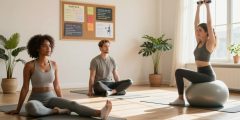
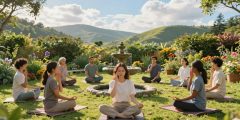
Recent studies show that 75 percent of Americans feel physical pain from high tension levels. This large number highlights why finding a quiet sanctuary for your health is vital. Transforming your living space into a hub for wellness does not require expensive spa visits.

By using home relaxation methods, you can find peace without leaving your front door. It is helpful and effective to practice these routines where you feel most safe. This guide explores various ways to handle life through calm and soft reflection.
These simple ideas will help you stay strong against a busy world. We will cover deep breathing and gentle movements that help your body slow down and rest. Discover how you can start feeling better today within your own four walls.
Key Takeaways
- Create a dedicated space for quiet reflection.
- Use deep breathing to reset your mind.
- Try light movement to relax your muscles.
- Limit your phone use to rest your eyes.
- Focus on consistent daily self-care routines.
- Keep your environment tidy at all times.
Why Your Home Is the Perfect Place for Stress Management
Your home can be more than just a place to live. It can be a haven for stress relief and relaxation. The comfort and familiarity of your home environment make it ideal for managing stress.
The Science Behind At-Home Stress Relief
Research shows that being in a comfortable and familiar environment can lower stress levels. Our homes are linked to feelings of safety and relaxation. This triggers a positive response in our brain.
Key factors that contribute to at-home stress relief include:
- A comfortable and clutter-free living space
- Access to natural light and fresh air
- The ability to personalize your environment
| Factor | Impact on Stress Relief |
|---|---|
| Comfortable Living Space | Reduces physical tension and promotes relaxation |
| Natural Light and Fresh Air | Boosts mood and reduces stress hormones |
| Personalization | Creates a sense of control and calmness |
Creating Your Personal Stress-Free Zone
To make your home a stress-relieving haven, create a personal stress-free zone. This can be done by:
Designating a specific area for relaxation, free from distractions and clutter.

By using these strategies, you can turn your home into a powerful tool for stress management. This will improve your overall well-being.
Breathing Exercises That Calm Your Nervous System Instantly
Managing stress is easier than you think. Your breath is a powerful tool. Breathing exercises have been used for centuries to calm the mind and body. By focusing on your breath, you can instantly reduce tension and promote relaxation.
The 4-7-8 Breathing Technique for Quick Relief
The 4-7-8 breathing technique, also known as the “relaxation breath,” is a deep breathing technique that can calm your nervous system in just a few minutes. To practice this technique, inhale through your nose for a count of 4, hold your breath for 7, and exhale through your mouth for 8. This cycle can be repeated as needed.
Dr. Andrew Weil, a well-known advocate of this technique, says,
“This method is a powerful tool for promoting relaxation and reducing stress.”
The key is to focus on the counting and the sensation of the breath moving in and out of the body.
Box Breathing to Lower Anxiety
Box breathing is another effective relaxation exercise that involves breathing in for a count of 4, holding for 4, exhaling for 4, and holding again for 4. This creates a “box” shape with your breath, promoting balance and calmness.
How to Practice Box Breathing
To practice box breathing, start by sitting comfortably with your back straight. Close your eyes and inhale for 4 counts, filling your lungs completely. Hold your breath for 4 counts, then exhale for 4 counts, emptying your lungs. Finally, hold your breath again for 4 counts before repeating the cycle.

Diaphragmatic Breathing for Deep Relaxation
Diaphragmatic breathing, also known as belly breathing, engages your diaphragm to promote deep breathing techniques. This type of breathing is more efficient and can lead to a state of deep relaxation.
Steps to Master Belly Breathing
To master diaphragmatic breathing, lie on your back with your knees bent. Place one hand on your belly and the other on your chest. Inhale deeply through your nose, allowing your belly to rise as your diaphragm descends. Your hand on your belly should move outward as you inhale, while the hand on your chest remains still. Exhale slowly through your mouth, allowing your belly to fall as your diaphragm rises.
As you practice these breathing exercises for stress, you’ll find that they become easier and more natural. They provide a powerful tool for managing stress and promoting relaxation.
Meditation and Mindfulness Practices for Daily Calm
Meditation and mindfulness are great tools for dealing with life’s ups and downs. They help you stay calm and feel better. Adding these practices to your daily routine can bring more peace and happiness into your life.
Starting a Simple Meditation Practice at Home
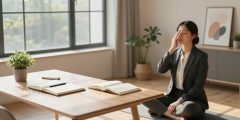
Starting meditation at home is easy and rewarding. Find a quiet, comfy spot where you can sit and relax. Start with short sessions, like a few minutes a day. As you get more comfortable, you can make your sessions longer.
Five-Minute Meditation for Beginners
A five-minute meditation is a great start. Sit comfortably, close your eyes, and focus on your breath. If your mind wanders, gently bring it back to your breathing. This can help calm your mind and focus it better.
“The key to meditation is not to try to stop your thoughts completely but to learn to observe them without judgment.” Regular practice helps you get better at this. It brings more calm and clarity to your daily life.
Guided Meditation Resources
Guided meditation resources are great for beginners. Apps like Headspace and Calm offer sessions for all levels. You can also find guided meditations on YouTube and other online platforms.

Mindfulness Exercises You Can Practice Anytime
Mindfulness is about being present and aware of your thoughts and feelings. It’s easy to do anywhere, anytime. It helps reduce stress and brings calm into your life.
Body Scan Meditation Technique
The body scan meditation is a good mindfulness exercise. Lie down or sit comfortably. Focus on each part of your body, starting from your toes and moving up to your head. Notice any sensations or feelings, and try to release tension as you breathe out.
Mindful Awareness of Your Surroundings
Another mindfulness practice is to notice your surroundings. Take a moment to observe the sights, sounds, and smells around you. This can help you stay present and reduce stress and anxiety.
Mindfulness exercises like these can be done anywhere. They’re a simple way to add calm to your daily life.
“Mindfulness isn’t difficult; we just need to remember to do it.”
Progressive Muscle Relaxation and Guided Imagery Therapy
Two techniques help you find calm: progressive muscle relaxation and guided imagery therapy. They are great for managing stress and relaxing at home.
Step-by-Step Progressive Muscle Relaxation
Progressive muscle relaxation helps release tension by tensing and relaxing muscles. Start by sitting or lying down and breathe deeply.
Tense your toes for a few seconds, then relax them. Move up your body, tensing and relaxing each group. This includes your feet, calves, thighs, hips, back, shoulders, arms, hands, neck, and face.
Which Muscle Groups to Target
Focus on major muscle groups for the best relaxation. Here’s a table of key areas:
| Muscle Group | Tensing Technique | Relaxation Tip |
|---|---|---|
| Toes | Curl toes under | Feel the release as you uncurl |
| Shoulders | Shrug upwards | Let them drop, feeling the weight release |
| Face | Tense facial muscles | Release into a gentle smile |
Using Guided Imagery for Mental Escape
Guided imagery therapy uses your imagination to create a peaceful space. It helps you escape stress and anxiety, offering mental calm.
Effective Visualization Techniques
To practice guided imagery, find a quiet spot. Close your eyes and breathe slowly. Imagine a peaceful place, using all your senses.
Imagine the sensation of sand between your toes or the sound of waves crashing. The more vivid your image, the better it reduces stress.
Creating Your Safe Place Imagery
Your safe place can be anywhere you feel relaxed and safe. It could be a beach, forest, or cozy room. Make it personal and vivid.

By using progressive muscle relaxation and guided imagery, you can better manage stress. This improves your overall well-being.
Easy Stress Relief Techniques at Home Through Movement
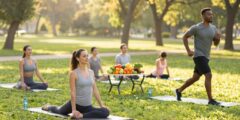
Moving your body can help you feel less stressed and happier. Activities like yoga, stretching, and dancing can make you feel better. They help lower stress and boost your mood.
Gentle Yoga Poses for Stress Reduction
Gentle yoga poses are great for easing stress and calming down. You can adjust them to fit your fitness level. Plus, you can do them right at home.
Child’s Pose and Forward Folds
Child’s Pose, or Balasana, stretches your back and relaxes you. Forward folds, like Uttanasana, ease tension in your neck and shoulders.

Restorative yoga uses props to support you in relaxing poses. It helps reduce stress and promotes deep relaxation.
Stretching Routines to Release Physical Tension
Stretching is a simple way to release physical tension and lower stress. It also makes you more flexible and less sore.
| Stretching Exercise | Target Area | Duration |
|---|---|---|
| Neck Stretch | Neck and Shoulders | 30 seconds |
| Shoulder Rolls | Shoulders and Upper Back | 1 minute |
| Chest Stretch | Chest and Shoulders | 30 seconds |
Dancing and Free Movement as Emotional Release
Dancing and free movement are fun ways to release emotional tension and reduce stress. Just put on some music and enjoy!
Dancing can make you feel happier and less stressed. It releases endorphins, which are like “feel-good” hormones.
Transform Your Home into a Relaxation Haven
Turning your home into a place of calm can really help with stress and anxiety. A few simple changes can make your space feel peaceful and relaxing.
Optimizing Light and Color for Calm
The right lighting and colors can change how you feel. Soft, warm lights make your home cozy and calm. But harsh, bright lights can make you feel stressed.
Tips for optimizing light:
- Use table lamps or floor lamps to create soft pools of light.
- Install dimmer switches to adjust the lighting level to your preference.
- Maximize natural light by keeping windows unobstructed.
Colors also play a big role in how we feel. Calming colors like blue, green, and neutral tones help us relax.
“Color is a power which directly influences the soul.” – Wassily Kandinsky

Using Aromatherapy for Instant Relaxation
Aromatherapy is a popular way to relax at home. It uses essential oils to help you unwind and feel less stressed.
Best Essential Oils for Stress Relief
Here are some top essential oils for stress relief:
- Lavender oil: Known for its calming and soothing properties.
- Chamomile oil: Promotes relaxation and reduces anxiety.
- Bergamot oil: Uplifting and calming, reducing stress and anxiety.
Sound Therapy and Calming Music
Sound therapy is another great way to relax at home. Calming music and nature sounds can help lower stress and promote calm.
White Noise and Nature Sounds
White noise and nature sounds are especially good for creating a calm space. Examples include:
- Rainfall or thunderstorm sounds.
- Ocean waves or gentle stream sounds.
- White noise machines or apps.
“Music is the divine way to tell beautiful, poetic things to the heart.” – Pablo Casals
Building Self-Care Rituals into Your Daily Routine
Self-care is now a must for dealing with today’s life challenges. Adding self-care rituals to your daily life can greatly improve your mental and physical health.
Morning Self-Care Practices to Start Your Day Right
Starting your day with a self-care ritual can set a positive tone. Morning self-care practices boost energy and prepare you for the day’s tasks.
Morning Journaling and Gratitude Practice
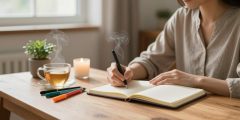
Journaling in the morning is a great self-care habit. It clears your mind and sets your day’s goals. Adding a gratitude practice to your journaling can also boost your mental health.
Evening Wind-Down Rituals for Better Sleep
As the day ends, evening wind-down rituals tell your body it’s time to relax. Activities like reading, warm baths, or gentle stretches are perfect for unwinding.
Digital Detox Before Bed
A key part of a good evening routine is a digital detox. Staying off screens for at least an hour before bed helps you sleep better. It reduces blue light and distracting content.
Micro-Breaks Throughout Your Day
Micro-breaks throughout your day also help. They can be as simple as deep breathing, stretching, or a quick walk outside. These breaks reduce stress and keep you focused.
| Self-Care Activity | Benefits | Duration |
|---|---|---|
| Morning Journaling | Clarifies mind, sets intentions | 10-15 minutes |
| Digital Detox | Improves sleep quality | 1 hour before bed |
| Micro-Breaks | Reduces stress, boosts productivity | 5-10 minutes |

Natural Stress Relief Remedies and Holistic Wellness
Looking for ways to relax? Natural stress relief methods can really help. By adding holistic wellness to our daily lives, we can handle stress better and feel better overall.
Herbal Teas and Natural Supplements for Stress
Herbal teas and natural supplements have been around for ages to help us relax and lower stress. They’re a great thing to add to our daily routine.
Chamomile, Lavender, and Ashwagandha
Chamomile, lavender, and ashwagandha are top herbs for easing stress. Chamomile tea calms us down. Lavender oil helps us relax. Ashwagandha helps our body handle stress better.
- Chamomile tea: Promotes calmness and relaxation
- Lavender oil: Used in aromatherapy for its calming effects
- Ashwagandha: Helps the body adapt to stress and promotes overall well-being
Therapeutic Baths for Deep Relaxation
A warm bath is a great way to unwind. Adding special elements can make it even better.
Creating the Perfect Stress-Relief Bath
To make a stress-relief bath, add epsom salts or essential oils like lavender or chamomile to your bath water. Soaking in a warm bath relaxes your muscles and calms your mind.
Creative Activities as Stress Outlets
Doing creative things is a great way to express yourself and relieve stress. Activities like art, coloring, and crafts are very soothing.
Art, Coloring, and Crafts for Mindfulness
Creating art is a mindfulness practice that keeps you present and focused. Coloring books and crafts are fun and creative ways to relax and express yourself.
Conclusion
Adding simple stress management tips to your daily routine can greatly reduce stress. Techniques like breathing exercises and meditation help a lot. Creating a relaxing space at home is also key.
Try stress relief tips like progressive muscle relaxation and gentle yoga at home. Aromatherapy is another great option. These practices can help you deal with life’s challenges and find balance.
Start using these stress management tips to lead a calmer, healthier life. With regular practice, you’ll learn to handle stress better. This will improve your overall quality of life.